

18 Home Organization Ideas That Make Every Room Easier to Live In
My house did not get organized in a weekend, and every time I tried that, it slid back within a month. The big purge felt great on Sunday and pointless by the following Friday, because I had sorted everything without giving any of it a real home. Things drifted back to counters, chairs, and the top of the stairs.
What finally worked was smaller and much less dramatic: one zone at a time, one room at a time, with a basket, a label, or a hook doing the quiet work. Organization that lasts is not about owning matching containers. It is about deciding, once, where each everyday thing lives, and making that spot easier to use than the floor.
These 18 ideas go room by room, the way clutter actually happens: the entry, the kitchen, the living room, the bedroom, the bathroom, and the closets. Most use dollar store and thrifted basics, and the last two are the habits that keep the whole system alive after the bins are bought.
The quick list: an entry landing strip, a shoe and boot tray zone, hooks at two heights, kitchen task zones, shelf risers, labeled door organizers, living room clutter baskets, a cord and remote station, a permanent donation box, under bed storage, a closet sorted by category, nightstand drawer dividers, bathroom door storage, decanted and labeled bottles, under sink bins, labels on everything, a ten minute daily reset, and one dollar store system per room.
18 Home Organization Ideas That Make Every Room Easier to Live In
1. Entry: give the doorway a landing strip with four fixed spots
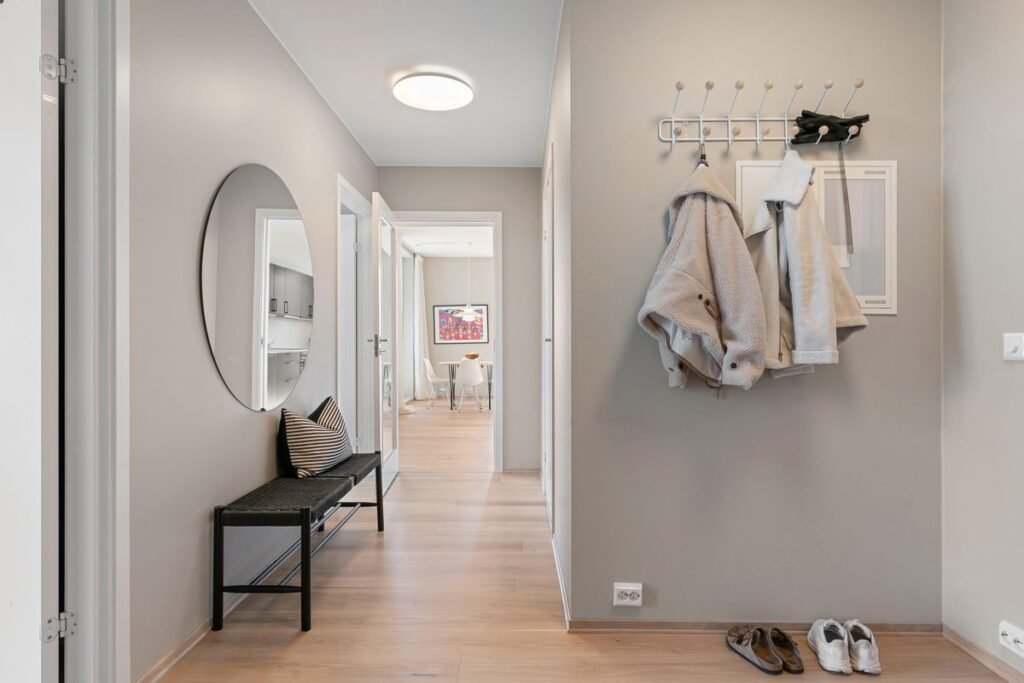
The entry sets the tone for the whole house, because everything you carry walks in with you. Build a landing strip with four fixed spots: hooks for keys, bag, and coat, a small bowl or tray for wallet and sunglasses, one basket for mail, and a mat that defines where shoes stop. When each thing has a spot within two steps of the door, the clutter never travels to the kitchen counter or the sofa. Keep the strip small on purpose. A tiny, complete system beats a big, half used one.
Budget tip: Adhesive hooks, a thrifted bowl, and one basket cover the whole strip for under $20, and renters can remove every piece without a mark.
2. Entry: contain shoes with a boot tray and one basket per person
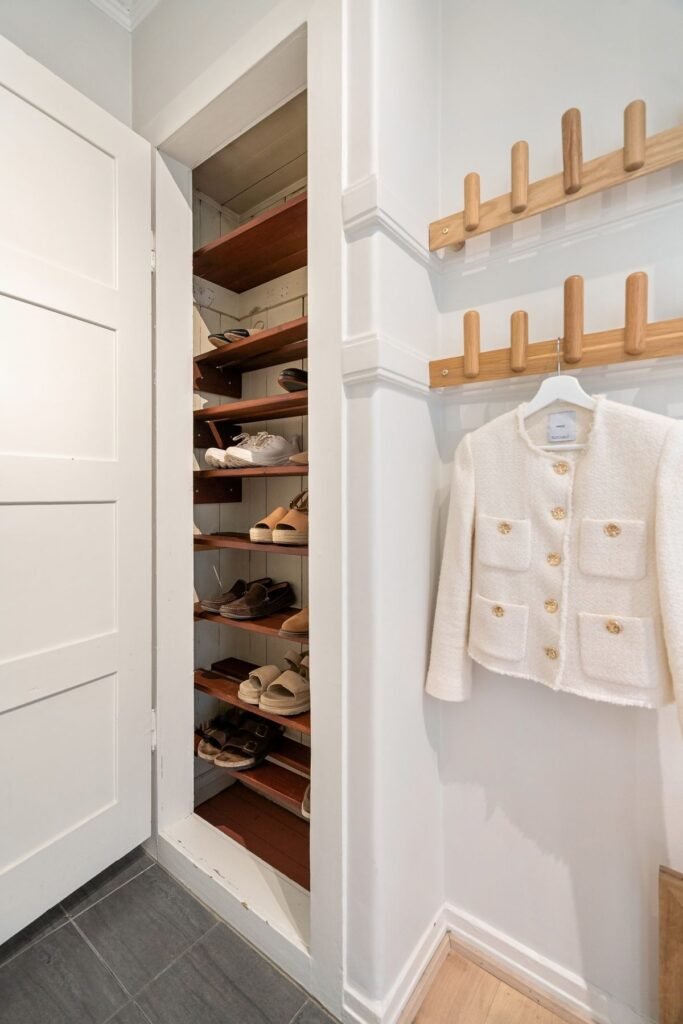
Shoes spread because they have no border. A boot tray or a washable mat under the bench gives wet and muddy pairs a clear edge, and one basket per person holds the everyday shoes that used to pile by the door. Set a house rule that pairs beyond two per person live in the bedroom closet, not the entry. When the tray is full, something moves out. That visible limit is the system, and it works on kids and adults equally well, most days.
Budget tip: Dollar store trays and matching baskets keep the whole entry shoe zone under $10, and matching containers make a busy corner look calm.
3. Entry and halls: hang hooks at two heights so everyone can reach

One row of hooks at adult height quietly excludes half the household. Add a second, lower row for kids’ coats, school bags, and dog leashes, and suddenly everyone can put their own things away, which is the real goal. Hooks beat hangers for daily items because there is no second step: lift, hang, done. Use the same trick inside the hall closet door for caps, scarves, and reusable shopping bags, the soft clutter that otherwise migrates to every chair in the house.
Budget tip: A strip of wood with thrifted hooks costs less than a ready made rack and can be cut to fit the exact wall you have.
4. Kitchen: organize by task zones, not by what fits where
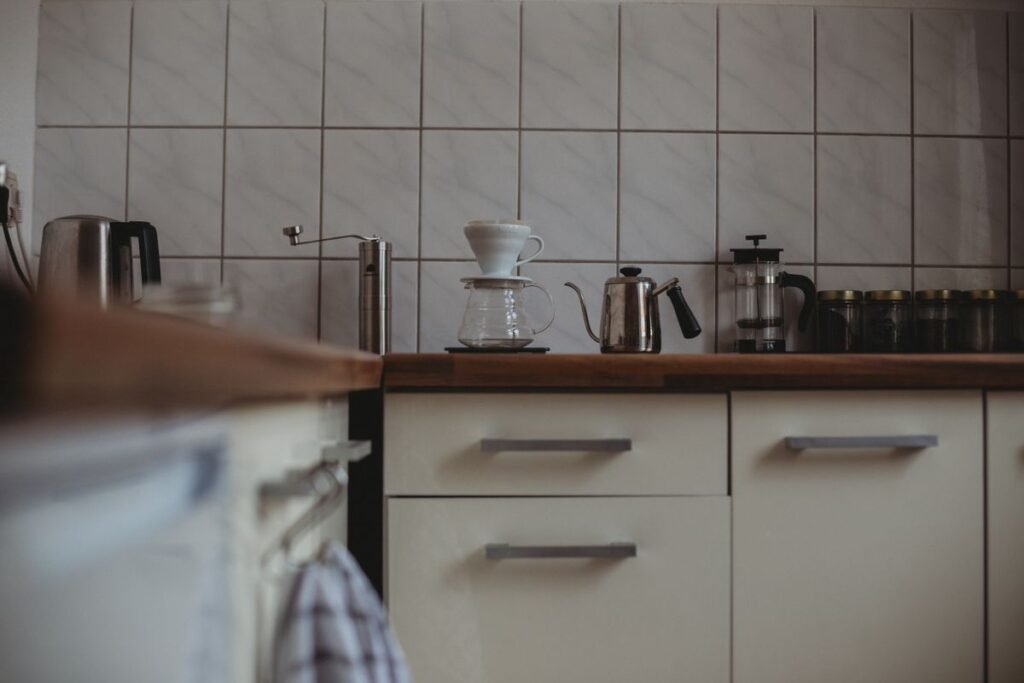
Kitchens feel chaotic when things are stored by size instead of by job. Rearrange into task zones: coffee and breakfast near the outlet, cooking tools and oils beside the stove, dishes and glasses near the dishwasher or sink, lunch packing in one drawer or cabinet. You stop crossing the room mid recipe, and putting things away becomes obvious, because every item belongs to a job, not a random gap. Do one zone per evening with boxes on the counter, and live with it a week before buying a single organizer.
Budget tip: Moving what you own is free. Most kitchens need zero new products, just permission to break the arrangement they inherited.
5. Kitchen: double cabinet space with shelf risers and stackable boxes
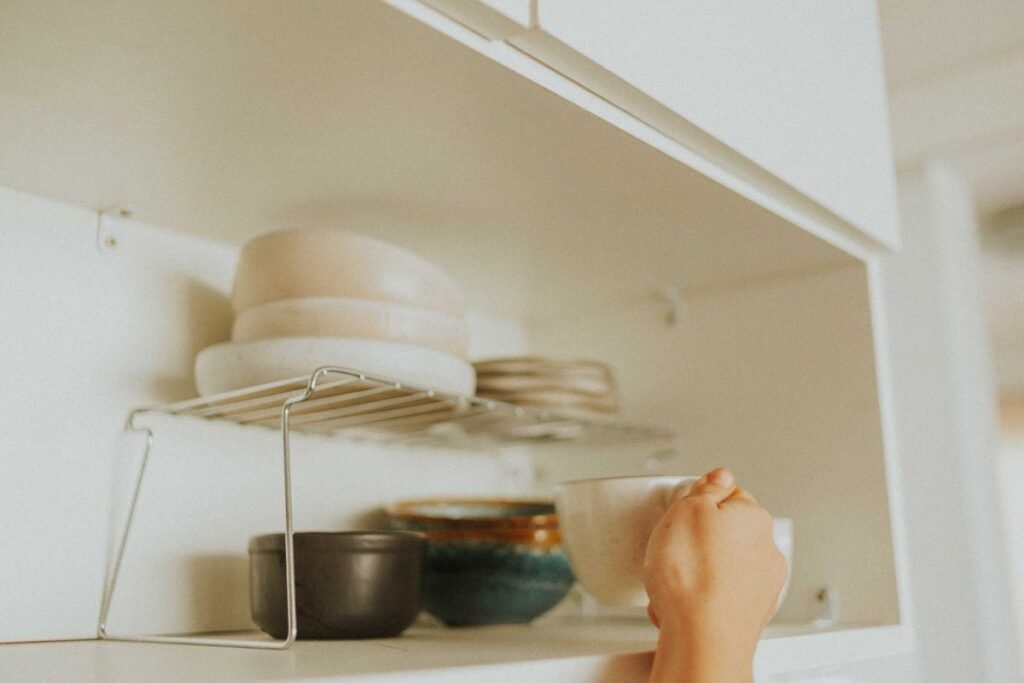
Most cabinets waste the top half of every shelf. A simple riser turns one shelf into two for mugs, bowls, and tins, and clear stackable boxes stop small packets becoming a jumble at the back. Group the boxes by job, baking together, snacks together, lunch supplies together, so a shelf reads like a short list. Measure shelf height and depth before buying anything, because a riser two inches too tall is just new clutter with a receipt. This is the cheapest real space you will ever add to a kitchen.
Budget tip: Dollar store risers and clear boxes do this job perfectly, since nobody sees them but you. Spend the savings on the zones guests do see.
6. Kitchen: use the inside of cabinet doors, and label what lives there
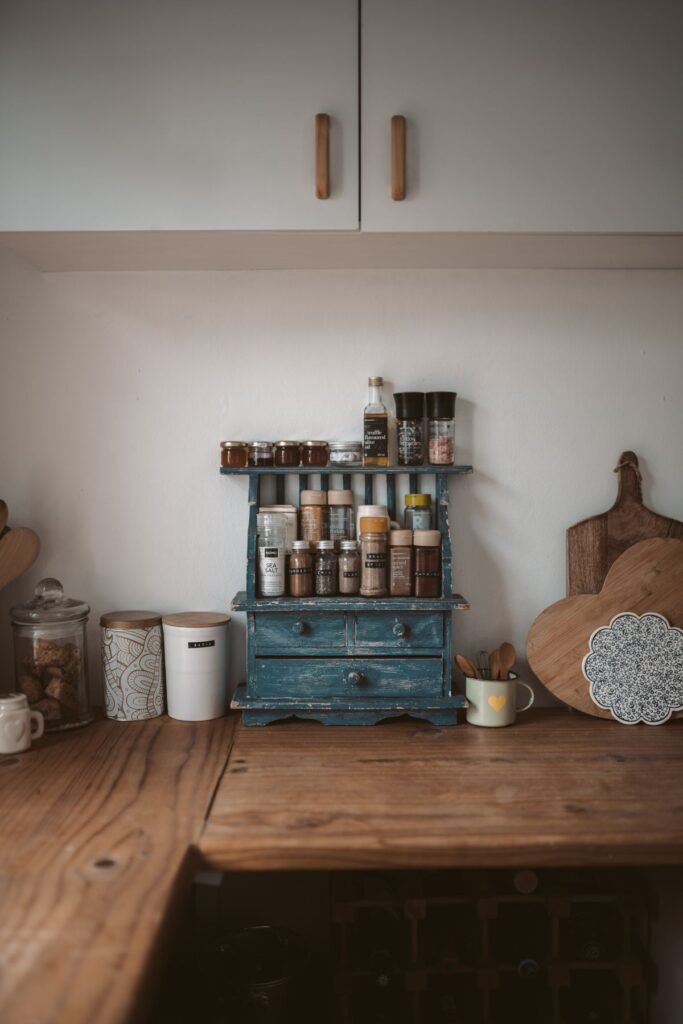
The inside face of every cabinet door is storage you already own. A slim rack or a row of adhesive hooks there holds spice packets, measuring spoons, foil and wrap, or cleaning cloths. Start with the door under the sink and the one nearest the stove, because those hold what you grab most. Then label the shelf edge or the inside of the door with what belongs there. Labels feel fussy until a guest or a teenager puts things away correctly without asking, and then they feel like magic.
Budget tip: One rack costs about $10 to $15. Do one door, live with it for a week, and let its success choose the next door.
7. Living room: put a basket where the clutter already lands
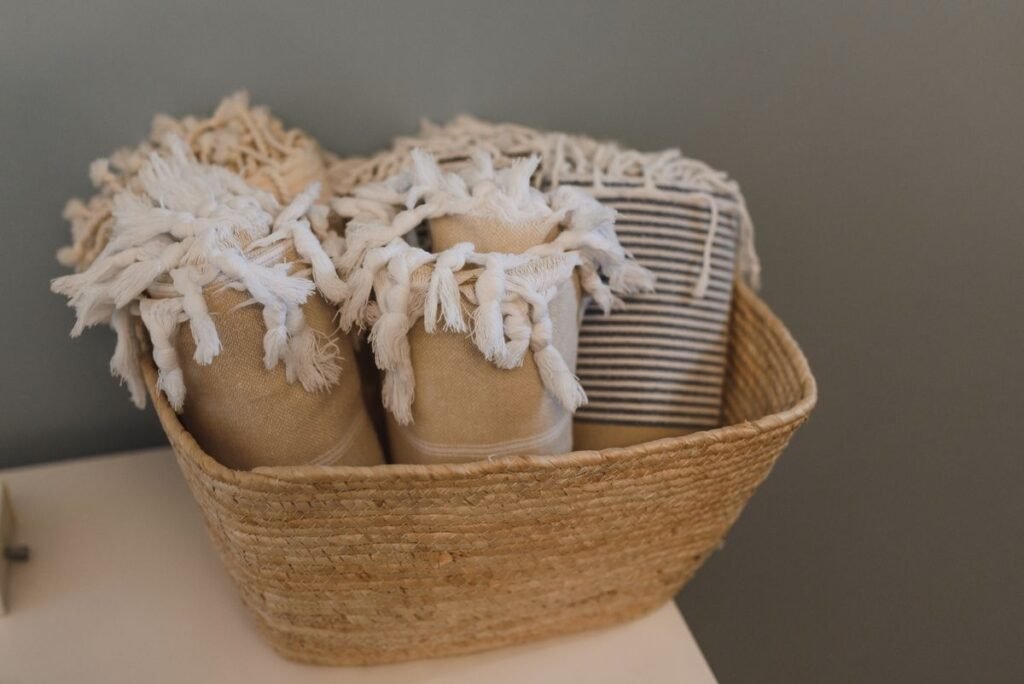
Every living room has a drift zone: the sofa end, the chair, the corner by the door. Fighting it never works, so give it a boundary instead. Place a lidded basket or a woven bin exactly where throws, magazines, toys, and chargers already land. When the container matches the room, storage stops looking like storage and starts looking like texture. One basket per drift zone, emptied or tidied weekly, keeps the room company ready in about two minutes, which is the honest standard most of us need.
Budget tip: Buy the basket secondhand and size it to the real pile, not the pile you wish you had. Too small overflows by Tuesday.
8. Living room: build one charging and remote station
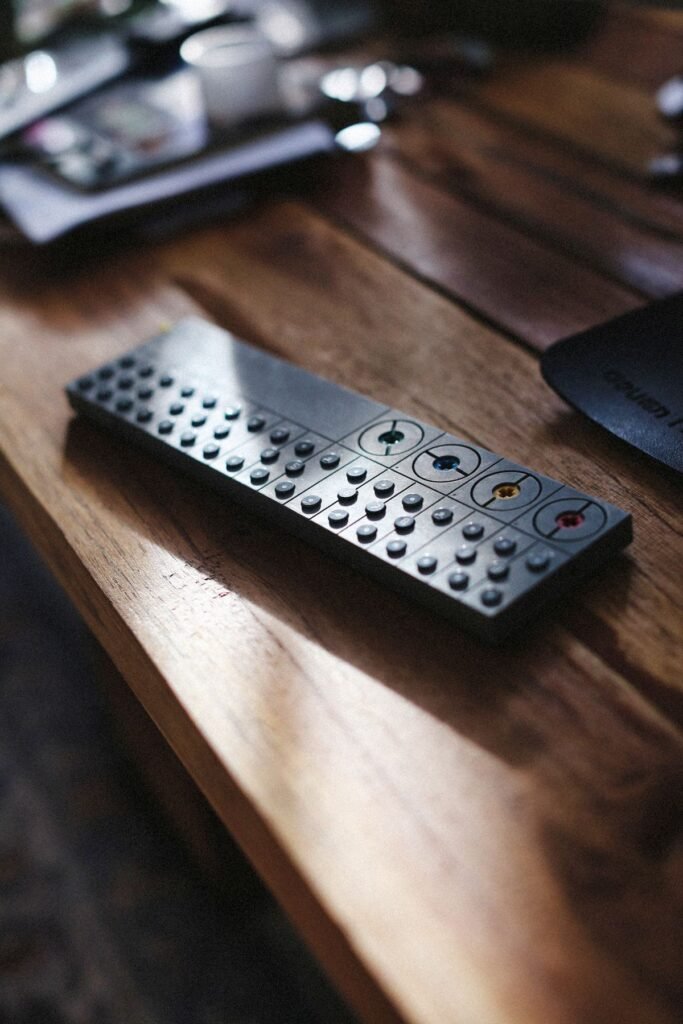
Loose remotes and charging cords are small, but they make a tidy room look undone in every photo and every evening. Corral them into one station: a tray or shallow box on the side table holding the remotes, one charging cable, and a small dish for the bits that appear from pockets. Route cords behind the furniture with clips so nothing dangles. When the station exists, nobody drapes a charger over the sofa arm again, and the nightly hunt for the remote ends for good.
Budget tip: A spare serving tray or a pretty book used as a base does this job free. Shop your shelves before you shop a store.
9. Living room and beyond: keep a permanent donation box by the door
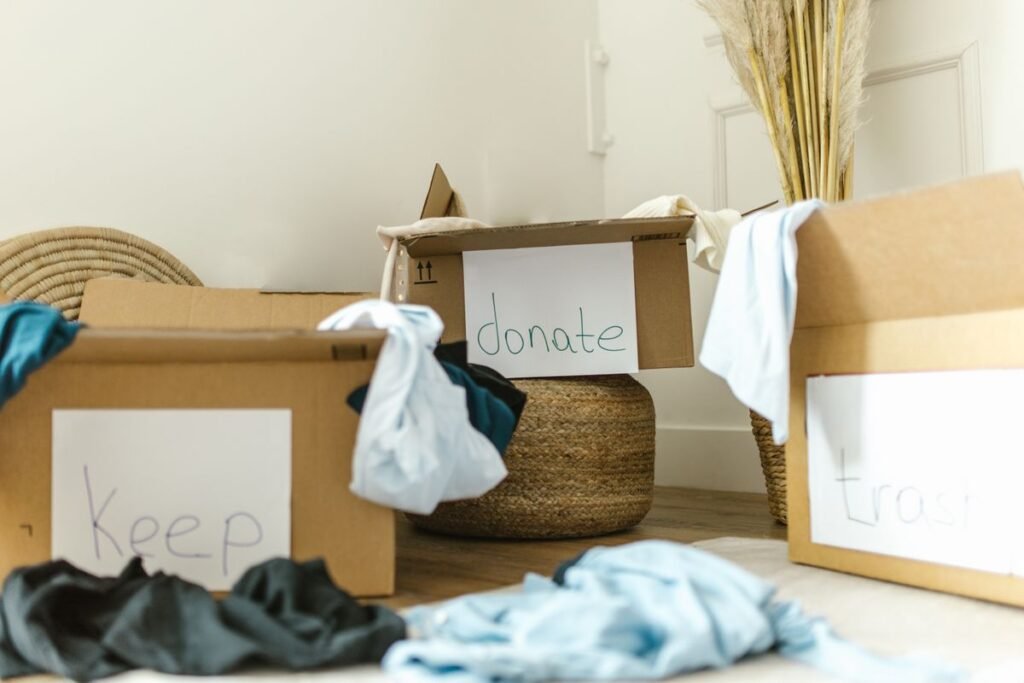
Clutter returns because leaving the house is a project. Fix the exit, not your willpower: keep one box or sturdy bag in a closet near the door, permanently, and drop things into it the moment you notice them: the duplicate gadget, the shirt that never fits, the toy that lost its audience. When the box is full, it goes straight to the donation drop on your next errand run. One in, one out stops being a slogan and becomes a habit with a box to prove it.
Budget tip: The box costs nothing, and it pays you back. Fewer duplicates bought means the donation habit quietly saves money every month.
10. Bedroom: turn under bed space into your second closet
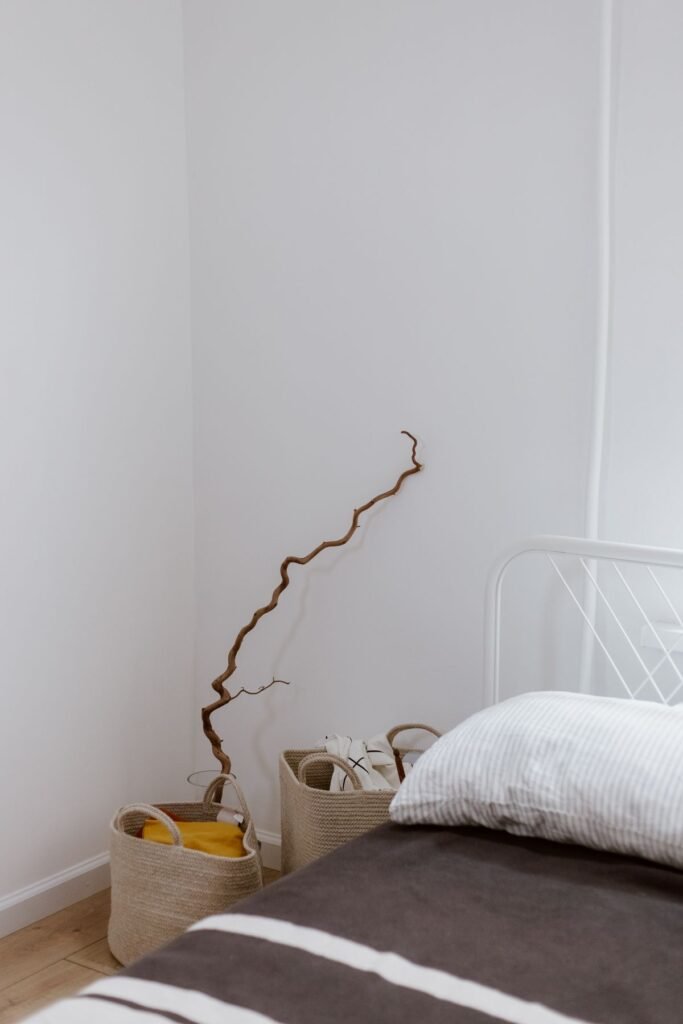
The space under the bed is a second closet hiding in plain sight. Slide in low, matching bins for out of season clothes, spare linens, and things you need monthly rather than daily. If the bins sit slightly too tall, inexpensive bed risers lift the frame a few inches and unlock surprising room. Tape a short list of what lives in each bin inside a dresser drawer, so nothing gets forgotten or bought twice. Beds are the biggest furniture in the house, so the storage under them should be working just as hard.
Budget tip: Measure the frame height before buying bins, and choose one uniform size from a dollar store so the row looks tidy and stacks later.
11. Bedroom closets: sort by category and switch to one hanger type

Closets feel messy when clothes are hung by history instead of by kind. Pull everything out by category, work shirts together, dresses together, everyday tops together, and let go of what no longer fits your life before anything goes back. Then switch to one slim hanger type throughout. Uniform hangers line clothes up at one height, free real inches of rail space, and make the whole closet look calmer every single morning. Finish with the most worn items at eye level and the rare pieces at the far ends.
Budget tip: Multipack slim hangers cost a few dollars per ten, and replacing them in one go is cheaper than the storage boxes people buy to avoid this job.
12. Bedroom: divide the nightstand drawer so it stops being a junk drawer

The nightstand drawer collects chargers, lip balm, receipts, and three pens that do not work, because it is one open space with no rules. Divide it with small boxes, a cutlery tray, or dollar store inserts so each thing gets a cell: book light and glasses, chargers, hand cream, notebook and one working pen. Anything that does not fit a cell does not live in the drawer. It takes ten minutes to set up, and the drawer stays sorted because the dividers, not your discipline, do the remembering.
Budget tip: Save small gift boxes and phone boxes for a month and you will have a full set of drawer dividers for free.
13. Bathroom: go vertical with door storage and a tall shower caddy

Bathrooms are small, wet, and full of bottles, which makes floor and counter space the worst storage in the room. Go vertical instead: a clear pocket organizer on the back of the door for toiletries and cleaning supplies, a tall or hanging shower caddy that uses the shower head height, and one shelf above the door for back stock towels and paper goods. Every bottle off the counter makes the room faster to clean and calmer to use at 7 a.m., which is when bathrooms earn their keep.
Budget tip: Dollar store pocket organizers work fine for light items. Spend a little more only on the caddy, which carries weight and water daily.
14. Bathroom: decant daily products into labeled, matching bottles

Half used bottles in six shapes and four languages make even a clean bathroom look cluttered. Decant the daily products, shampoo, body wash, lotion, into matching bottles with simple labels, and keep the big refill bottles in one bin under the sink. The shelf suddenly looks like a calm hotel shelf, and you can see at a glance what is running low. Keep it honest: only decant what you use every week, and let the rarely used products share one basket instead of performing on the counter.
Budget tip: Buy the matching bottles once, slowly, from thrift and dollar stores. Same color family and same lid style is close enough to read as a set.
15. Bathroom: give under sink chaos two bins and a lazy susan

Under the sink is where good intentions go to leak. Pull everything out, wipe the cabinet, and put things back in just two bins: cleaning supplies in one, personal back stock in the other. A small lazy susan or turntable in front holds the daily bottles, so nothing hides at the back growing a science project. Add a small towel or liner under pipes if yours drip. Ten minutes here ends the archeology dig every time you need a new toothpaste.
Budget tip: Measure the cabinet around the pipes before buying bins. Two medium bins that fit beat four clever ones that do not.
16. Closets and everywhere: label the system, not just the boxes
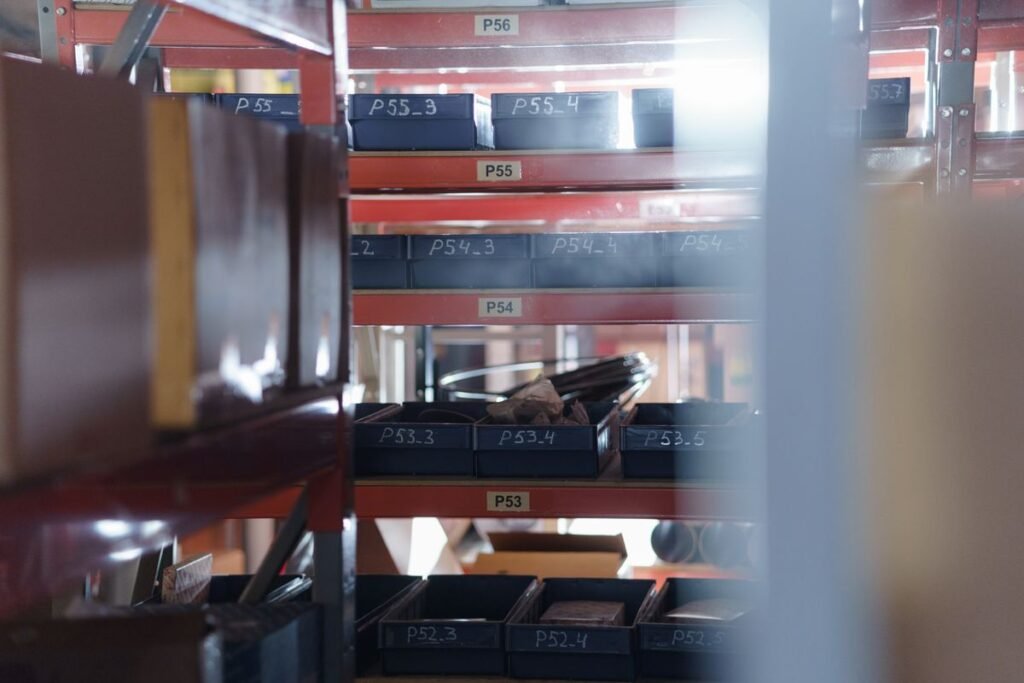
Labels are what turn your private logic into a household system. A basket only you understand is a junk basket with a lid. Label shelves, bins, and drawer fronts with plain words: winter hats, guest towels, batteries and bulbs, school papers. Use a label maker if you have one, painter’s tape and a marker if you do not. Labels also protect your work: when everything has a printed home, putting things away correctly becomes the easiest option for everyone, including future tired you.
Budget tip: Painter’s tape labels cost pennies, peel off cleanly, and can be rewritten as your system changes, which it will, and that is fine.
17. Everywhere: the ten minute daily reset that protects it all
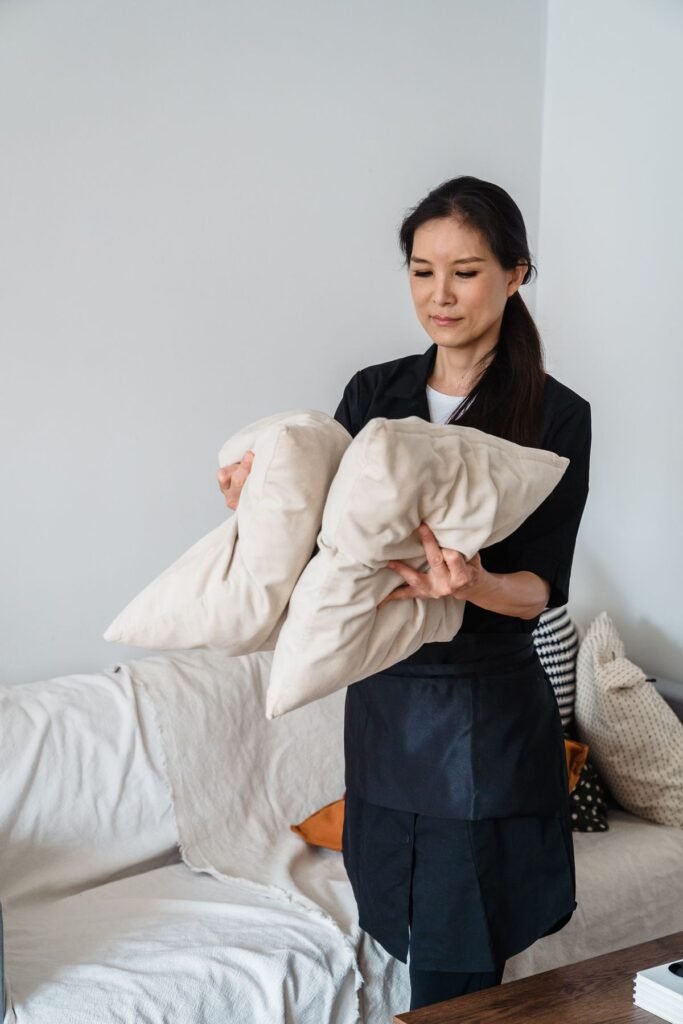
No system survives without a small daily habit, and the habit that works is embarrassingly short. Pick one time, after dinner or before bed, set a timer for ten minutes, and reset the main rooms: cushions straight, surfaces clear, entry strip emptied back to its spots, donation box fed if needed. Ten minutes daily is what stops the weekend long clean from existing. Put music on, involve whoever is standing nearby, and stop when the timer stops, even mid room. The stopping is what makes you willing to start again tomorrow.
Budget tip: This habit is free, and it is the highest value idea on the list. Bins organize things, but the reset is what organizes the week.
18. Everywhere: build one dollar store system per room, in matching colors
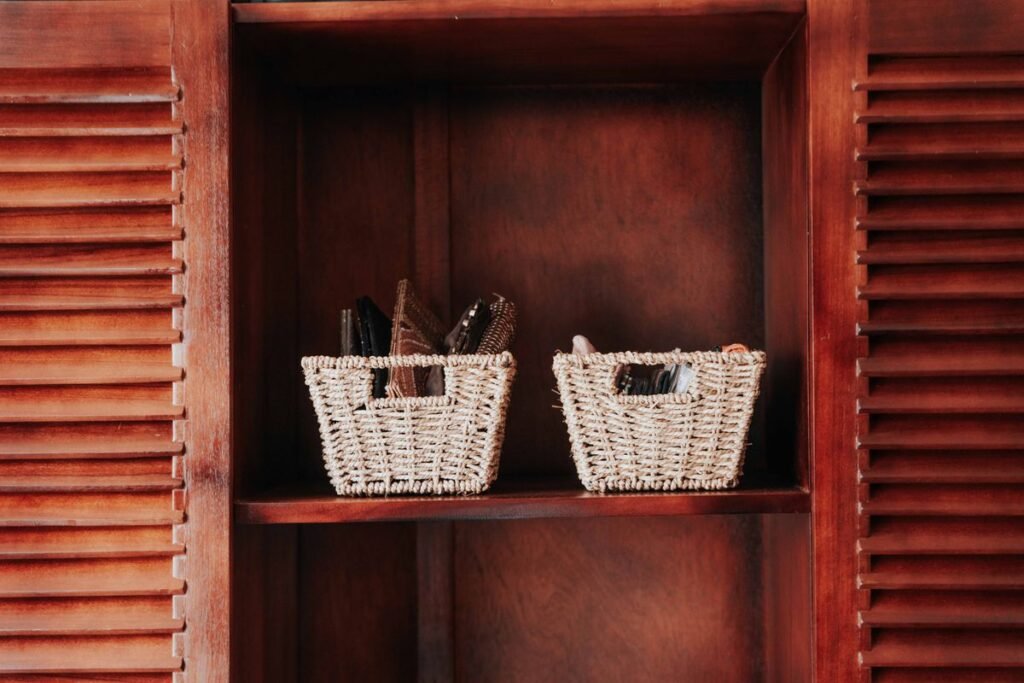
When you do buy organizers, buy them like a system, not a spree. Choose one color or material per room, white bins in the kitchen, woven in the living room, clear in the bathroom, and buy that room’s pieces together from dollar and discount stores. Matching containers calm the visual noise that makes organized shelves still look messy. Go room by room, one per month if the budget is tight, with measurements in your phone and a list in your hand. The system grows slowly, and every room it reaches stays done.
Budget tip: Photograph each finished shelf. The photo is your shopping list guardrail: if a new container does not match the picture, it does not come home.
If you want to go deeper in the room where clutter fights hardest, my Small Kitchen Ideas on a Budget walks through cabinet by cabinet fixes, and my seasonal New Year Home Organisation reset builds on this same room by room system when you want a fresh start.
Mistakes That Make Organizing Not Stick
Sorting without giving things a home. A tidy pile with no basket, hook, or label drifts back within the week. Every category needs a physical spot, not just a neat moment.
Buying containers before measuring and decluttering. Bins bought for things you should have let go just organize clutter at extra cost. Sort first, measure second, buy third, in that order.
Making the system only you understand. If putting things away needs your personal map, nobody else will do it. Labels and obvious zones are what make a system survive a busy household.
Organizing the whole house in one weekend. It burns out by Sunday and rebounds by Friday. One room, or even one zone, finished properly beats five rooms done in a panic.
Skipping the daily reset. Even perfect bins overflow without ten small minutes a day. The reset is not extra credit, it is the maintenance the whole system runs on.
Frequently Asked Questions
Where should I start organizing if my whole house feels messy?
Start at the entry, because it is small, visible, and used by everyone twice a day. Build the landing strip, contain the shoes, and enjoy one finished zone. Then take the kitchen task zones next, and let the wins, not the guilt, choose the order after that.
How much does it cost to organize a home on a budget?
A room by room system built on dollar store bins, thrifted baskets, and painter’s tape labels usually costs $10 to $30 per room. The expensive version is buying containers before decluttering, because you pay to store things you did not need.
What is the best storage for small spaces?
Vertical and hidden storage: door organizers, shelves above doors, risers inside cabinets, and bins under the bed. Small homes rarely lack space, they lack layers. If a surface can hold a second level or a door can hold a rack, that is found room.
How do I keep my home organized after the first tidy?
Two habits do it: a permanent donation box so things leave easily, and a ten minute daily reset so small messes never become weekend projects. Systems hold things, but habits hold systems. Start both the same week you organize the first room.
How do I get my family to follow the system?
Make the right thing the easy thing: hooks at their height, labels in plain words, baskets where their clutter already lands. Then reset together for ten minutes with music on. People follow systems that were built around their real habits, not against them.
Your Move
Do not organize the house this weekend. Organize the entry on Saturday, in under an hour: hooks, a tray, a shoe border, done. Live with one working zone for a week and notice how it feels coming home. Then take one kitchen zone the next weekend, and keep going room by room at that pace. In six weeks the house runs on systems, and you never had to survive a single marathon tidy.
Start the donation box and the ten minute reset today, before any new bin arrives. Those two free habits will protect every shelf you fix from here on.
I share new room by room systems, dollar store finds, and small space resets every week, so follow @dwellonbudget on Pinterest for more home organization ideas, and save this guide for your next one room weekend.
